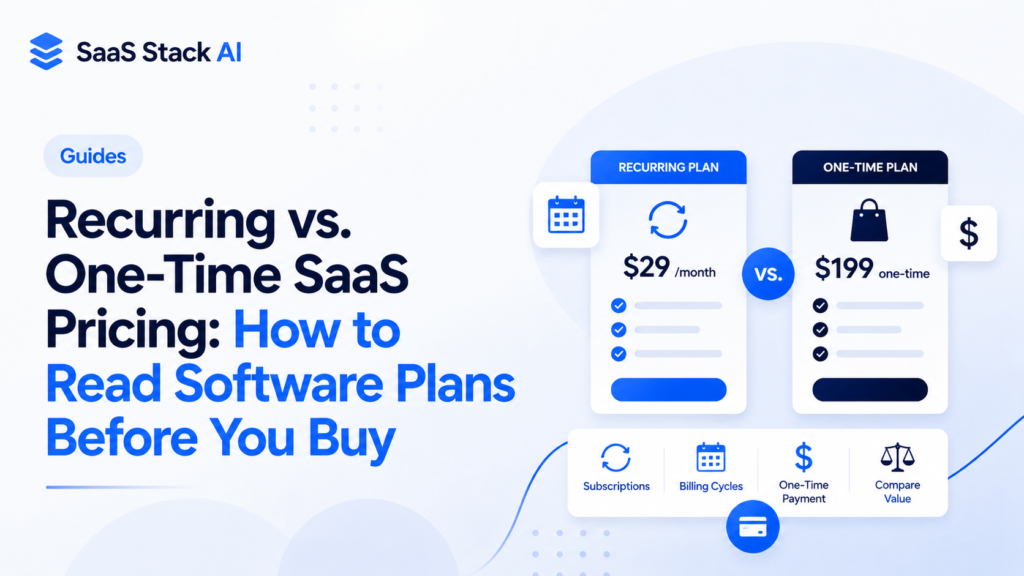
SaaS pricing pages are designed to be confusing. Per-seat, per-month, annual “discounts,” usage tiers, freemium, and the occasional lifetime deal — it is easy to overpay or get locked into the wrong plan. Here is how to read them like a pro.
Monthly vs. annual
Annual billing is almost always cheaper per month — often 20% or more — but you pay upfront and commit for a year. Use monthly while you are evaluating a tool, then switch to annual once you are confident it is a keeper.
Per-user pricing adds up
Many tools charge per user (per “seat”). A $15/user plan looks cheap until a five-person team makes it $75/month. When comparing tools, always calculate the cost for your real team size, not the headline price.
Freemium: useful or a funnel?
Free tiers are great for getting started, but check what’s limited — usage caps, missing integrations, or branding. A free plan that forces an upgrade the moment you get value is really a trial. One that genuinely covers a small operation is a gift.
Watch the tier jumps
The feature you need is often locked one tier above where you’d expect. Before subscribing, confirm the specific capability you’re buying for is included in the plan you’re choosing — not the next one up.
Lifetime deals: proceed with care
A one-time “lifetime” price can be excellent value for a tool you’ll use for years — but only if the company is stable and the product is maturing. For mission-critical tools, a reliable subscription often beats a cheap lifetime deal on a product that may not last.
When we review tools, we always calculate real-world cost for a typical team — see our reviews and stacks for transparent pricing on every recommendation.