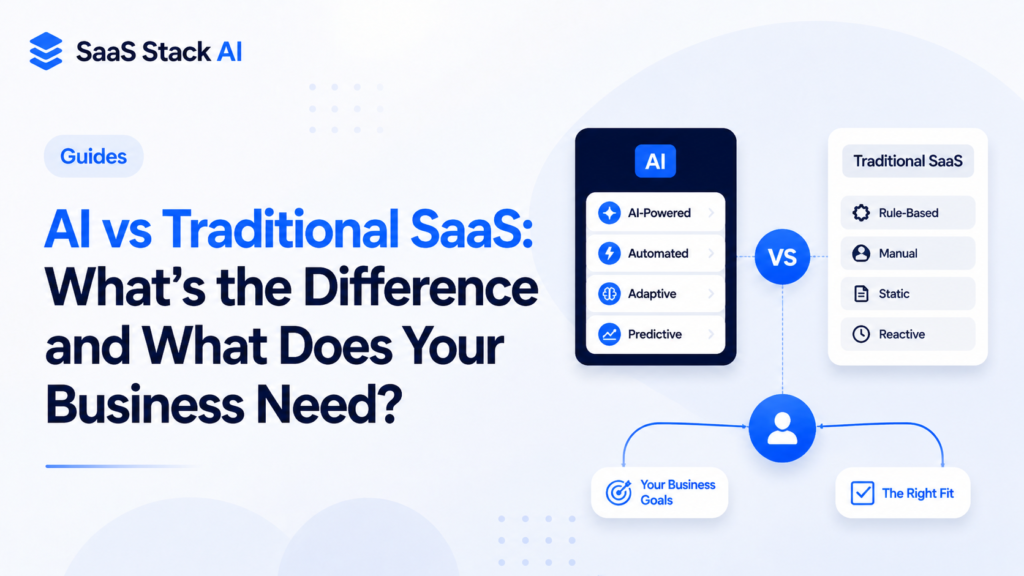
Every product seems to be “AI-powered” now, which makes it harder than ever to tell what you are actually buying. Understanding the difference between traditional SaaS and AI tools helps you avoid paying a premium for a label — and choose what genuinely moves the needle.
What traditional SaaS does
Traditional software-as-a-service gives you a reliable tool to do a defined job: store customer records, send emails, manage projects, build a website. It does what you tell it, consistently. The value is in organization, access, and workflow.
What AI tools add
AI tools generate or decide — they draft content, summarize, suggest, edit images, or automate judgment-based tasks. Instead of just storing your work, they help produce it. The value is in speed and leverage: doing more with fewer hands.
The line is blurring
Most modern SaaS now bundles AI features — your CRM drafts emails, your design tool removes backgrounds, your writing app optimizes for SEO. So the real question is rarely “AI or not.” It is whether a given AI feature saves you meaningful time or is just marketing.
How to decide what you need
Ask two questions of any AI feature: does it do a task I currently spend real time on, and is the output good enough to use with light editing? If yes to both, it is worth paying for. If it produces work you’d redo anyway, skip it. Our hands-on reviews test exactly this — whether the AI is genuinely useful or just a checkbox.
For most businesses, the right answer is a blend: dependable SaaS for the system of record, plus a few well-chosen AI tools for the work that eats your week.